Translation Quality & Compliance
Structured Language-Service Workflows Built for Accuracy, Consistency & Accountability
EPIC builds quality into every stage of the language-service workflow through qualified linguist selection, structured review, terminology management and documented quality assurance. Our processes are designed to support accurate, consistent and accountable delivery while adapting to each organization’s content, regulatory and operational requirements.
How EPIC Builds Quality Into the Workflow
Quality is built into the way EPIC plans, manages and delivers language services. From linguist selection and project setup through review and final delivery, our workflows combine qualified resources, defined processes and quality controls appropriate to the requirements of each assignment.
01
Qualified Linguists
Linguists are selected based on language pair, professional qualifications, subject-matter expertise and the specific requirements of each assignment.
02
Defined Workflows
Projects follow structured workflows that establish requirements, responsibilities, review steps and delivery expectations from the outset.
03
Independent Review
When required by the service or project workflow, translated content is reviewed by an additional qualified linguist to support accuracy, consistency and completeness.
04
Terminology Management
Client-approved terminology, glossaries, translation memories and reference materials help maintain consistency across projects, languages and recurring content.
05
Quality Assurance
Linguistic review and technology-assisted QA checks help identify potential issues involving terminology, numbers, formatting, consistency and untranslated content before delivery.
06
Documented Delivery
Project records, revisions and quality-control activities support traceability and accountability throughout the language-service workflow.
What ISO 17100 Means For Your Organization
ISO 17100 establishes clear requirements for:
Translator qualifications and subject-matter expertise
Mandatory review and quality assurance steps
Terminology management and linguistic consistency
Secure handling of confidential content
Documented, auditable translation workflows
For regulated industries, this standard provides traceability and accountability—two things regulators and auditors expect but rarely spell out explicitly. Below is how ISO 17100 requirements are applied in real-world translation workflows to protect accuracy, consistency, and accountability.
How EPIC Builds Quality Into the Workflow
ISO 17100 establishes a structured framework for professional translation, defining requirements for linguist qualifications, review, quality assurance and documented project workflows.
01
Structured Translation Workflows
Projects follow defined translation, review and quality-control steps designed to support consistent and repeatable delivery.
02
Qualified Linguists
Linguists are selected based on language pair, professional qualifications, subject-matter competence and project requirements.
03
Independent Review
Translated content undergoes review by a second qualified professional to identify linguistic errors, inconsistencies and deviations before delivery.
04
Terminology Management
Approved terminology, reference materials and project resources help maintain linguistic consistency across documents, languages and recurring updates.
05
Traceability & Version Control
Structured project records and revision controls help maintain visibility across translation, review, updates and document versions.
06
Documented Quality Assurance
Quality-control activities are incorporated into the workflow to support reviewable, documented and accountable translation delivery.
ISO 17100-Aligned Translation Workflows
EPIC supports translation projects through workflows aligned with ISO 17100, the international standard for professional translation services. ISO 17100 establishes requirements for translator qualifications, project management, translation, independent revision and quality assurance.
For projects using an ISO 17100-aligned workflow, EPIC applies qualified linguist assignment, defined review procedures and documented quality controls to support accuracy, consistency and traceability throughout the translation process. Explore ISO 17100 Translation Services →
Linguist Qualifications & Credential Management
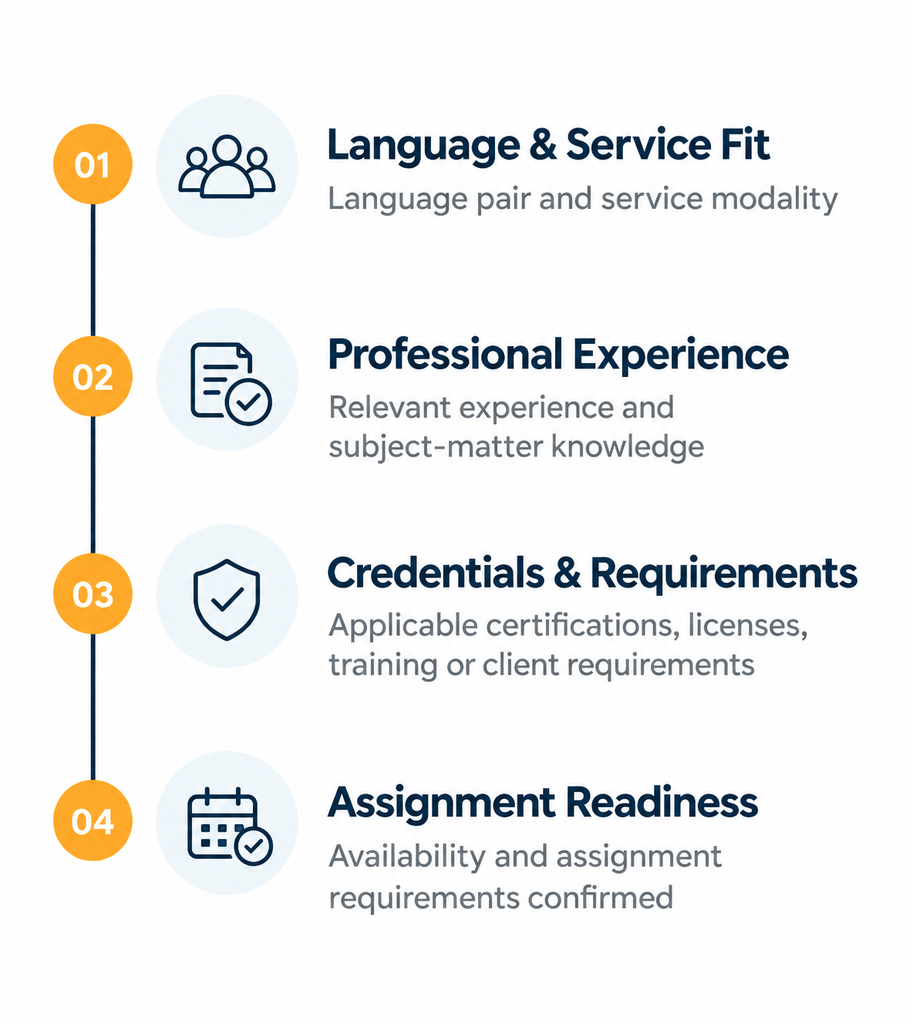
The quality of any language service begins with the professionals assigned to the work. EPIC evaluates linguists and interpreters based on the qualifications relevant to the service, language pair, subject matter and specific requirements of each assignment.
Depending on the project, qualification criteria may include professional experience, subject-matter expertise, certifications, licenses, training, testing results and other client- or assignment-specific requirements. Interpreter credentials and supporting documentation can also be tracked as part of EPIC’s resource management and compliance processes.
Terminology & Translation Memory
Consistent terminology is essential when organizations manage recurring content, multiple languages or materials produced across departments and teams. EPIC can incorporate client-approved terminology, glossaries, translation memories and reference materials into the translation workflow to help maintain consistency from one project to the next.
As multilingual content evolves, these linguistic resources can be maintained and reused to support consistent terminology, preserve previously approved translations and provide linguists with relevant project context. This is particularly valuable for organizations managing technical terminology, regulated content, product documentation, institutional language or established brand terminology.
Your approved terminology becomes part of the workflow—not something that has to be reestablished with every project.
Compliance & Accessibility
01
LEP & Language Access
EPIC provides translation and interpreting services that help government agencies, healthcare organizations, educational institutions and other organizations support meaningful language access for individuals with limited English proficiency. Services can be structured around an organization’s languages, content, communication needs and applicable language-access requirements.
This is safer than the current page’s broad claim that EPIC’s workflows themselves “meet federal, state, and local requirements.” Current federal guidance continues to recognize meaningful access obligations in applicable contexts, but the client’s precise obligations depend on the organization and governing requirements. Explore LEP Compliance Translation Services →
02
ADA & Accessible Communication
EPIC supports organizations that need effective communication with people who are deaf or hard of hearing through services such as qualified ASL interpreting, Video Remote Interpreting and CART. Service delivery can be aligned with the communication setting, participant needs and applicable accessibility requirements.
The ADA recognizes qualified interpreters, real-time captioning/CART and video-based interpreting among the types of auxiliary aids and services that may support effective communication. The appropriate aid or service depends on the circumstances, so I would not retain the current claim that EPIC’s services “ensure full accessibility compliance. Explore ADA Language Access Services →
03
HIPAA & Protected Information
For healthcare language services involving protected health information, EPIC can support workflows designed to safeguard sensitive information through confidentiality requirements, controlled information handling and appropriate contractual and operational safeguards.
HIPAA requirements depend on the relationship and services involved. HHS states that when an outside interpreter service acts on behalf of a covered healthcare provider and handles PHI, the arrangement can be subject to HIPAA business-associate requirements, including appropriate written assurances. Explore Healthcare Language Services →
04
Government & Legal Requirements
EPIC supports government agencies, legal organizations and other regulated environments with translation and interpreting workflows structured around assignment-specific requirements. Depending on the project, this may include certified translations, qualified or credentialed interpreters, defined review procedures, secure document handling and documented project records. Explore Government Language Services →
Quality Assurance Technology
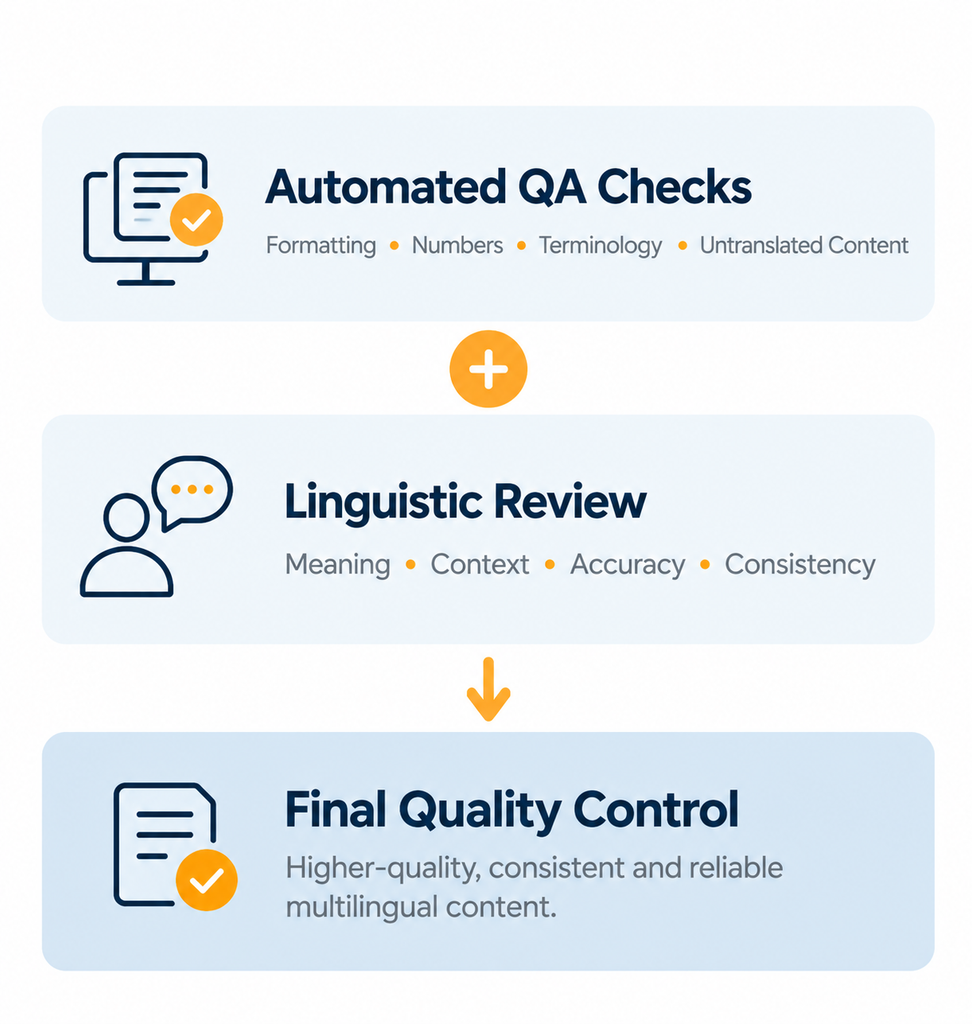
Technology helps EPIC identify potential issues efficiently and consistently throughout the translation workflow. Quality assurance tools can be used to check multilingual content for issues such as untranslated segments, terminology inconsistencies, numerical discrepancies and formatting problems before final delivery.
These automated checks complement—not replace—linguistic review. Qualified professionals remain responsible for evaluating meaning, context, terminology and overall linguistic quality, while technology provides an additional layer of control for issues that can be identified systematically.
For recurring and complex multilingual programs, EPIC can also incorporate translation memories, terminology resources and workflow technology to help maintain consistency across projects, languages and content updates. Explore Translation Technology & Workflow Automation →
Trust, Security & Operational Resilience
Security & Data Protection
Learn how EPIC approaches confidentiality, secure information handling, access controls and the protection of client information across translation and interpreting workflows. Explore Security & Data Protection →
Business Continuity
See how distributed linguist resources, multiple service modalities, centralized technology and escalation procedures help support continued language access when operating conditions change. Explore Business Continuity →
ISO 17100 Translation Services
Explore how qualified linguists, independent revision and documented quality controls can be incorporated into ISO 17100-aligned translation workflows. Explore ISO 17100 Translation Services →