ISO 17100 Translation Services
Standards-Aligned Translation Workflows Built for Quality, Consistency & Accountability
EPIC provides ISO 17100-aligned translation services for organizations that require structured quality controls, qualified linguists, independent review and documented translation workflows.
From regulated and technical content to legal and compliance-sensitive documentation, we help organizations manage multilingual content through consistent, review-based processes designed to support accuracy and traceability.
What is ISO 17100?
ISO 17100 is an international standard for professional translation services that establishes requirements for translator qualifications, project management, review and quality assurance. It emphasizes a structured translation process in which qualified linguists and defined review procedures are used to support accuracy, consistency and accountability.
For organizations managing regulated, technical, legal or other high-risk content, ISO 17100-aligned workflows provide a documented approach to translation quality. They help organizations maintain consistent processes, demonstrate appropriate review controls and improve traceability across multilingual projects.
What ISO 17100 Means For Your Organization
ISO 17100 establishes clear requirements for:
Translator qualifications and subject-matter expertise
Mandatory review and quality assurance steps
Terminology management and linguistic consistency
Secure handling of confidential content
Documented, auditable translation workflows
For regulated industries, this standard provides traceability and accountability—two things regulators and auditors expect but rarely spell out explicitly. Below is how ISO 17100 requirements are applied in real-world translation workflows to protect accuracy, consistency, and accountability.
ISO 17100 Quality Controls
ISO 17100 establishes a structured framework for professional translation, defining requirements for linguist qualifications, review, quality assurance and documented project workflows.
01
Structured Translation Workflows
Projects follow defined translation, review and quality-control steps designed to support consistent and repeatable delivery.
02
Qualified Linguists
Linguists are selected based on language pair, professional qualifications, subject-matter competence and project requirements.
03
Independent Review
Translated content undergoes review by a second qualified professional to identify linguistic errors, inconsistencies and deviations before delivery.
04
Terminology Management
Approved terminology, reference materials and project resources help maintain linguistic consistency across documents, languages and recurring updates.
05
Traceability & Version Control
Structured project records and revision controls help maintain visibility across translation, review, updates and document versions.
06
Documented Quality Assurance
Quality-control activities are incorporated into the workflow to support reviewable, documented and accountable translation delivery.
ISO 17100 – Aligned Translation for Compliance, Review & Audit Readiness
ISO 17100 defines the mandatory processes, qualifications, and quality controls required for professional translation services. When applied to compliance-driven and regulated content, the standard ensures that translated materials are produced using documented, review-based, and auditable workflows.
Under ISO 17100–aligned translation processes, content used for regulatory review, legal validation, and audit purposes is handled with an emphasis on traceability, consistency, and risk management throughout the translation lifecycle.
The following content categories are commonly managed within ISO 17100–aligned workflows due to their compliance sensitivity and review requirements:
Formal submissions and filings prepared for government agencies or regulatory authorities
Compliance declarations, certifications, and regulatory statements demonstrating conformity with applicable laws, directives, or standards
Product labeling, packaging content, and inserts subject to formal review or approval processes
Agreements, licenses, permits, and legally binding documentation requiring exact linguistic and structural fidelity
Training materials, policies, and compliance documentation required for audits, inspections, and internal controls
Controlled documents managed within regulated workflows, document control systems, and formal approval environments
By following ISO 17100-aligned requirements—including qualified linguist assignment, independent review, terminology management and documented quality assurance—organizations can reduce translation-related risk and support regulatory review, procurement evaluation and audit readiness.
A Practical Partner For ISO-Aligned Translation
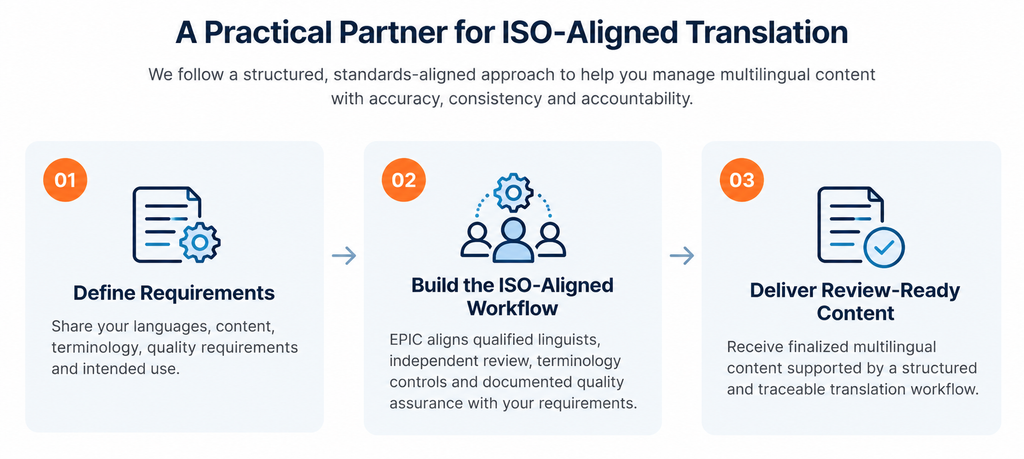
ISO 17100 is one component of EPIC’s broader quality framework, which includes linguist qualification, terminology management, quality assurance and documented workflows. Explore EPIC Quality & Compliance →
ISO-Aligned translation Across 200+ Languages
EPIC supports multilingual translation programs across 200+ languages, with linguist assignment based on language pair, subject matter, project requirements and available review resources.
FAQs – ISO 17100 Translation Services
Below are common questions organizations raise when assessing translation providers against ISO 17100 requirements.
What Qualifications Do Linguists Have Under ISO 17100–Aligned Translation Workflows?
ISO 17100 establishes specific requirements for translator competence and qualifications. Under ISO-aligned workflows, linguists are selected based on verified education, professional experience, subject-matter expertise, and demonstrated ability to translate content within defined domains.
EPIC Translations assigns linguists who meet ISO 17100 qualification criteria and have experience working with technical, legal, regulated, or compliance-sensitive content. Linguist selection is tied to both language pair and content type to ensure competence is appropriate for the project scope.
Does ISO 17100 Require Certified Translations for Government or Regulatory Use?
ISO 17100 governs translation process quality, not legal certification requirements. When certified translations are required by a specific authority, jurisdiction, or document type, certification is handled according to those external requirements rather than ISO itself.
ISO-aligned workflows help ensure translations are produced using documented, review-based processes, which supports acceptance and defensibility during review, procurement evaluation, or audit—but certification requirements are always determined by the receiving authority. Learn more about Certified Document Translation Services →
How Does ISO 17100 Help Ensure Accuracy and Consistency?
ISO 17100 requires a multi-step translation process, including translation by a qualified linguist and mandatory independent review by a second qualified professional. This structure is designed to identify errors, inconsistencies, and deviations before delivery.
In addition, ISO-aligned workflows emphasize terminology management, reference alignment, and controlled updates to support consistency across documents, languages, and revision cycles—particularly important for long-term or repeat translation programs.
Are ISO 17100–Aligned Translations Suitable for Review, Audit, or Procurement Evaluation?
One of the primary benefits of ISO 17100 alignment is that translation processes are documented, reviewable, and auditable. This supports organizations that must demonstrate due diligence during internal audits, third-party reviews, or procurement evaluations.
ISO-aligned workflows provide traceability around linguist qualification, review steps, and quality controls, helping organizations defend translation quality decisions when required.
How Is Confidential or Sensitive Content Handled Under ISO 17100?
ISO 17100 includes requirements related to confidentiality and information security throughout the translation process. Under ISO-aligned workflows, access to project materials is controlled, confidentiality obligations are enforced, and secure handling procedures are applied.
These practices support organizations working with proprietary, technical, legal, or compliance-sensitive content that must be protected throughout translation and review.
What Types of Content Are Commonly Managed Using ISO 17100–Aligned Workflows?
ISO 17100–aligned workflows are commonly applied to content where accuracy, consistency, and defensibility are critical, including technical documentation, legal materials, regulated content, internal policies, training materials, and other high-risk or review-sensitive documentation.
The suitability of ISO-aligned workflows depends on content risk, regulatory exposure, and quality expectations rather than document label alon.
Do ISO 17100–Aligned Workflows Support Ongoing Updates and Version Control?
Yes. ISO 17100 emphasizes controlled processes, consistency, and documented quality management, which are especially important for content that evolves over time.
Under ISO-aligned workflows, updates and revisions are managed using structured version control, terminology consistency, and reference alignment. This helps organizations maintain translation quality across document lifecycles, revisions, and multilingual updates while reducing the risk of inconsistencies introduced during change cycles.