Translation Errors That Lead to Product Liability Lawsuits | Global Compliance Guide for Manufacturers
Introduction
Technical translation services for manufacturers play a critical role in reducing product liability, compliance, and safety risks across multilingual product documentation.
For companies operating across international markets, multilingual communication is no longer simply a customer service consideration. It directly impacts product safety, regulatory compliance, operational continuity, and liability exposure. Incorrectly translated warnings, inconsistent technical terminology, or poorly localized instructions can lead to product misuse, workplace injuries, customs delays, regulatory investigations, product recalls, and litigation.
As global supply chains continue to expand, manufacturers are distributing technical products to increasingly diverse multilingual markets. Product manuals, packaging, software interfaces, warning labels, training materials, and regulatory documentation often need to be translated into multiple languages while maintaining complete technical accuracy and formatting consistency.
This creates a major operational challenge for multinational corporations.
Technical content frequently contains:
- safety-critical terminology,
- engineering specifications,
- measurements,
- electrical instructions,
- dosage information,
- legal disclaimers,
- and compliance language that cannot tolerate ambiguity.
Even small translation inconsistencies can create serious downstream consequences once products enter global markets.
Manufacturers, medical device companies, automotive suppliers, industrial equipment providers, pharmaceutical organizations, and electronics companies increasingly recognize that multilingual documentation is part of their overall risk management strategy. Translation quality directly affects customer safety, regulatory compliance, and brand reputation.
At the same time, the rapid growth of AI translation tools has introduced additional complexity. While machine translation technologies can improve efficiency in some workflows, relying solely on automated translation for technical or regulated content may create substantial quality and liability risks when human review and subject matter expertise are absent.
This article explores:
- how translation errors create product liability exposure,
- the most common high-risk multilingual documentation mistakes,
- industries most vulnerable to translation-related legal claims,
- the growing role of AI translation risk,
- and what global organizations should look for in a professional translation partner.
For manufacturers and exporters operating internationally, multilingual communication should be treated as a core compliance and operational function — not an afterthought.
Why Translation Errors Become Legal Risks
Product liability claims often center around whether a company provided adequate warnings, instructions, and safety information to end users. When products are distributed internationally, this responsibility extends across every language in which the product is marketed or sold.
If a translated warning label, installation guide, or operating instruction contains errors that contribute to misuse or injury, the manufacturer may face allegations that the product was improperly labeled or inadequately explained for that market.
In many cases, liability does not stem from the physical product itself. Instead, it stems from communication failures surrounding the product.
This is particularly important for:
- industrial machinery,
- pharmaceuticals,
- medical devices,
- automotive components,
- chemicals,
- electronics,
- and consumer products involving safety instructions.
Examples of high-risk multilingual documentation include:
- operating manuals,
- assembly instructions,
- hazard warnings,
- safety data sheets (SDS),
- dosage instructions,
- electrical specifications,
- emergency procedures,
- maintenance documentation,
- and packaging inserts.
A mistranslated instruction can alter the intended meaning of technical content in ways that may not be immediately visible during internal review. Once products enter distribution channels, however, those translation errors may affect thousands of users simultaneously across multiple markets.
Common legal theories connected to translation-related product liability claims include:
- failure to warn,
- inadequate instructions,
- negligence,
- breach of warranty,
- misleading labeling,
- and regulatory noncompliance.
Regulatory agencies also increasingly expect multilingual safety communication to be clear, accurate, and accessible to intended users. Poor translations may create compliance issues involving:
- OSHA-related workplace safety communication,
- FDA labeling requirements,
- EU MDR documentation,
- transportation safety standards,
- or international consumer protection regulations.
Beyond legal exposure, translation failures can also produce major operational disruptions, including:
- shipment holds,
- rejected imports,
- distributor disputes,
- delayed product launches,
- customer complaints,
- and reputational damage.
For multinational corporations, multilingual technical documentation is not simply administrative content. It is a critical operational control mechanism that directly impacts product safety and compliance outcomes.
How Multilingual Documentation Supports Global Regulatory Compliance
Global manufacturers and exporters are increasingly required to provide accurate multilingual documentation as part of broader regulatory compliance obligations. As products move across international markets, regulatory agencies and industry standards organizations often expect safety information, operating instructions, labeling, and technical documentation to be clearly understood by end users in the target market.
In many industries, multilingual communication directly affects whether products can be legally distributed, safely operated, or successfully imported into specific regions.
Manufacturers operating internationally may encounter multilingual documentation requirements involving:
- FDA-regulated labeling,
- OSHA Hazard Communication Standard,
- CE marking documentation,
- EU MDR medical device regulations,
- international transportation requirements,
- hazardous material labeling,
- and country-specific consumer protection laws.
For example, safety-related instructions for industrial equipment may need to communicate:
- operational hazards,
- maintenance procedures,
- emergency shutdown protocols,
- lockout/tagout procedures,
- and warning classifications
with complete clarity across multiple languages simultaneously.
In regulated industries, poorly translated documentation may create compliance issues even when the physical product itself meets technical standards. Regulators may evaluate whether users can reasonably understand how to safely install, operate, maintain, and troubleshoot the product within their language environment.
This becomes especially important for:
- multinational manufacturers,
- exporters,
- healthcare companies,
- pharmaceutical organizations,
- automotive suppliers,
- and industrial equipment providers distributing products globally.
Organizations also increasingly face pressure to maintain consistency across:
- multilingual packaging,
- labels,
- user manuals,
- safety data sheets,
- software interfaces,
- and online product documentation.
A single inconsistency between translated documents may create operational confusion or trigger compliance concerns during audits, inspections, or product reviews.
Professional translation workflows help organizations support multilingual regulatory compliance through:
- terminology management,
- structured review procedures,
- multilingual QA controls,
- formatting verification,
- and subject matter expert review.
As global regulatory environments continue evolving, multilingual documentation should be viewed as an essential compliance function integrated into broader operational risk management strategies.

Common Translation Errors That Create Product Liability Exposure
Incorrect Safety Warnings
Safety warnings are among the highest-risk areas of multilingual product documentation.
Warnings are designed to:
- prevent injury,
- communicate hazards,
- clarify prohibited actions,
- and guide safe product usage.
Even minor wording errors can materially change the severity or meaning of a warning statement.
For example:
- a mistranslated “Caution” versus “Danger,”
- incorrect hazard terminology,
- or ambiguous electrical safety language
may reduce the perceived seriousness of the warning.
In technical environments, unclear wording can contribute to:
- improper equipment operation,
- unsafe installation,
- chemical exposure,
- electrical accidents,
- or workplace injuries.
Translation providers handling technical safety documentation must understand:
- regulatory terminology,
- hazard classification systems,
- industry-specific warning conventions,
- and multilingual compliance standards.
Literal word-for-word translation is often insufficient for safety-critical content.
Measurement and Unit Conversion Errors
Global manufacturers frequently distribute documentation across regions using different measurement systems.
Translation workflows involving:
- metric conversions,
- torque values,
- temperature specifications,
- voltage information,
- pressure ratings,
- and dosage measurements
must be handled carefully.
Incorrect conversions or formatting inconsistencies can create severe operational consequences.
Examples include:
- incorrect medication dosage instructions,
- improper machinery calibration,
- unsafe electrical installation,
- or inaccurate chemical mixing instructions.
In technical industries, numbers themselves are often as important as the translated language surrounding them.
Professional technical translation workflows typically include:
- multilingual QA review,
- engineering terminology validation,
- and formatting verification procedures
to reduce these risks.
Inconsistent Technical Terminology
Terminology inconsistency is one of the most common issues in multilingual product documentation.
When the same component, warning, or operational step is translated differently across documents, users may become confused regarding:
- operating procedures,
- maintenance steps,
- replacement parts,
- or safety requirements.
This frequently occurs when organizations:
- use multiple vendors without centralized terminology management,
- rely on unreviewed AI translation,
- or lack structured multilingual QA workflows.
In regulated industries, terminology inconsistency may also create audit and compliance issues.
Professional translation providers often use:
- terminology databases,
- translation memory systems,
- glossary management,
- and reviewer validation workflows
to maintain consistency across multilingual documentation sets.
Poorly Translated Operating Instructions
Technical operating instructions require more than linguistic fluency.
They require:
- subject matter understanding,
- contextual interpretation,
- and familiarity with technical product usage.
Poorly translated instructions may cause users to:
- skip critical steps,
- misunderstand assembly procedures,
- incorrectly configure equipment,
- or misuse products.
This becomes particularly dangerous in:
- manufacturing facilities,
- healthcare settings,
- industrial operations,
- and laboratory environments.
Clear multilingual instructions are essential for reducing operational risk and supporting safe product usage across international markets.
Formatting Errors in Multilingual Documentation
Translation quality is not limited to language accuracy alone.
Formatting failures can also create operational and legal risks.
Examples include:
- missing warning symbols,
- broken diagrams,
- misaligned tables,
- truncated text,
- omitted notes,
- incorrect page references,
- or improperly formatted multilingual packaging.
Technical translation projects often involve:
- engineering diagrams,
- CAD references,
- multilingual labels,
- software screenshots,
- regulatory forms,
- and desktop publishing requirements.
If formatting is not reviewed carefully during multilingual production, important safety information may become unclear or inaccessible.
This is one reason why multilingual desktop publishing and formatting review are increasingly important within enterprise translation workflows.

Why Multilingual Desktop Publishing Matters for Technical Documentation
Technical translation projects often involve far more than converting words from one language into another. Many multilingual documents must also preserve highly structured layouts, diagrams, formatting systems, tables, engineering references, and visual safety communication elements.
This is where Multilingual Desktop Publishing becomes critically important, especially when translated manuals, packaging, labels, technical PDFs, diagrams, and compliance materials must remain visually accurate across languages.
Technical documents frequently contain:
- engineering schematics,
- warning icons,
- multilingual packaging layouts,
- product labels,
- charts,
- screenshots,
- diagrams,
- and formatted tables
that must remain visually accurate after translation.
When multilingual formatting is handled improperly, organizations may encounter:
- truncated text,
- overlapping layouts,
- missing safety information,
- distorted diagrams,
- broken formatting,
- or inconsistent multilingual packaging presentation.
Certain languages also require significantly more space than English, creating layout expansion challenges within:
- labels,
- manuals,
- packaging,
- software interfaces,
- and technical PDFs.
For global manufacturers, formatting clarity directly affects usability and safety. Poorly formatted multilingual documentation may make technical instructions difficult to follow or reduce the visibility of critical warning information.
Professional multilingual desktop publishing workflows help maintain:
- visual consistency,
- document readability,
- multilingual formatting integrity,
- and compliance presentation standards across translated materials.
This is particularly important for organizations distributing:
- industrial equipment,
- medical devices,
- pharmaceuticals,
- electronics,
- automotive products,
- and highly technical documentation internationally.
As multilingual documentation requirements continue expanding, translation quality increasingly depends on both:
- linguistic accuracy,
- and professional formatting control.
Unreviewed AI Translation Output
AI translation tools are rapidly becoming part of enterprise workflows. However, relying solely on machine-generated output for technical or regulated content can create significant risks.
AI systems may:
- misinterpret technical terminology,
- generate inconsistent wording,
- overlook contextual meaning,
- or produce fluent but inaccurate translations.
Because AI output often appears linguistically polished, errors may be harder to detect without qualified human review.
Technical translation requires:
- contextual understanding,
- regulatory awareness,
- terminology precision,
- and industry-specific expertise.
AI systems alone do not fully replace these functions.
Another important concern involves the growing tendency for AI-generated translations to appear highly fluent even when technical meaning is incorrect. This can create a false sense of confidence during internal review processes. Unlike obvious grammatical errors, contextual inaccuracies within technical documentation may remain undetected until products reach end users, distributors, or regulatory reviewers.
AI translation systems may also struggle with:
- specialized engineering terminology,
- multilingual formatting structures,
- industry-specific abbreviations,
- regional regulatory language,
- and context-dependent safety instructions.
In highly technical environments, even small wording inconsistencies may materially affect how instructions or warnings are interpreted across different markets.
For high-risk documentation, many organizations now use hybrid workflows that combine:
- translation technology,
- terminology databases,
- human technical linguists,
- and structured QA review processes.
This balanced approach helps improve efficiency while maintaining quality control and reducing liability exposure.
Industries Most Vulnerable to Translation-Related Liability Risks
Manufacturing and Industrial Equipment
Manufacturers distributing machinery internationally face substantial multilingual documentation obligations, which is why many global organizations rely on professional Manufacturing Translation Services to support product manuals, safety documentation, installation guides, packaging, labels, and compliance materials across international markets.
Technical content often includes:
- installation procedures,
- maintenance instructions,
- lockout/tagout guidance,
- operational warnings,
- and safety protocols.
Incorrect translations may create workplace safety risks and operational failures.
Industrial buyers also increasingly expect multilingual documentation as part of procurement and compliance requirements.
Common Documents Manufacturers Need Professionally Translated
Global manufacturers and multinational organizations often manage large volumes of technical and operational documentation requiring accurate multilingual translation. These materials frequently support product safety, compliance obligations, customer communication, and international distribution workflows.
Because many of these documents contain technical, legal, or safety-critical information, professional translation processes are essential for reducing operational and liability risks.
Commonly translated manufacturing and technical documents include:
Product Manuals
User manuals and operational guides help customers safely operate products, equipment, and systems across global markets. Translation inaccuracies in these materials may contribute to improper product usage or safety incidents.
Safety Data Sheets (SDS)
Chemical manufacturers and industrial organizations frequently require multilingual SDS documentation to communicate:
- hazardous material handling,
- storage requirements,
- emergency procedures,
- and workplace safety information.
Installation and Assembly Instructions
Technical installation documentation often includes detailed procedures involving:
- electrical systems,
- machinery configuration,
- calibration,
- and safety requirements.
Clear multilingual instructions help reduce installation errors and operational failures.
Packaging and Labeling
Multilingual product packaging may contain:
- warning statements,
- compliance notices,
- ingredient information,
- handling instructions,
- and legal disclaimers.
Formatting consistency and terminology accuracy are critical in multilingual packaging environments.
Technical Specifications and Engineering Documentation
Engineering documentation frequently contains:
- measurements,
- tolerances,
- diagrams,
- performance specifications,
- and component references
requiring highly controlled terminology management.
Training Materials
Manufacturers operating globally often provide multilingual employee training materials involving:
- workplace safety,
- equipment usage,
- maintenance procedures,
- and compliance requirements.
Warranty and Compliance Documentation
Warranty policies, certification materials, and regulatory documentation may also require professional multilingual translation to support international operations and customer communication.
As organizations expand internationally, translation quality becomes increasingly connected to:
- operational efficiency,
- product consistency,
- customer trust,
- and regulatory compliance.
Medical Devices and Healthcare Products
Medical device translation errors can directly affect patient safety.
Examples include:
- incorrect dosage instructions,
- mistranslated contraindications,
- inaccurate device calibration guidance,
- or incomplete procedural documentation.
Healthcare-related multilingual documentation frequently requires:
- specialized medical linguists,
- regulatory familiarity,
- and highly controlled QA procedures.
Organizations distributing medical devices internationally must also consider regulatory labeling and safety communication requirements such as FDA Medical Device Labeling Requirements when preparing multilingual product documentation.
Regulatory scrutiny in this industry is particularly high.
Automotive and Transportation
Automotive manufacturers distribute large volumes of multilingual technical documentation, including:
- repair manuals,
- dashboard interfaces,
- warning systems,
- maintenance procedures,
- and diagnostic information.
Inconsistent or inaccurate translations may contribute to:
- improper repairs,
- safety failures,
- warranty disputes,
- or operational misuse.
Automotive supply chains also involve extensive international coordination across multilingual stakeholders.
Pharmaceuticals and Chemicals
Pharmaceutical and chemical products involve highly regulated multilingual safety communication.
This includes:
- SDS documentation,
- handling instructions,
- storage guidance,
- dosage information,
- and emergency response procedures.
Translation inaccuracies in these environments may create both legal and environmental risks.
Electronics and Consumer Products
Electronics manufacturers frequently support multilingual:
- setup guides,
- packaging,
- user interfaces,
- troubleshooting documentation,
- and warranty materials.
Global consumer distribution increases the importance of accurate localization and multilingual customer communication.
How Translation Errors Disrupt Global Supply Chains
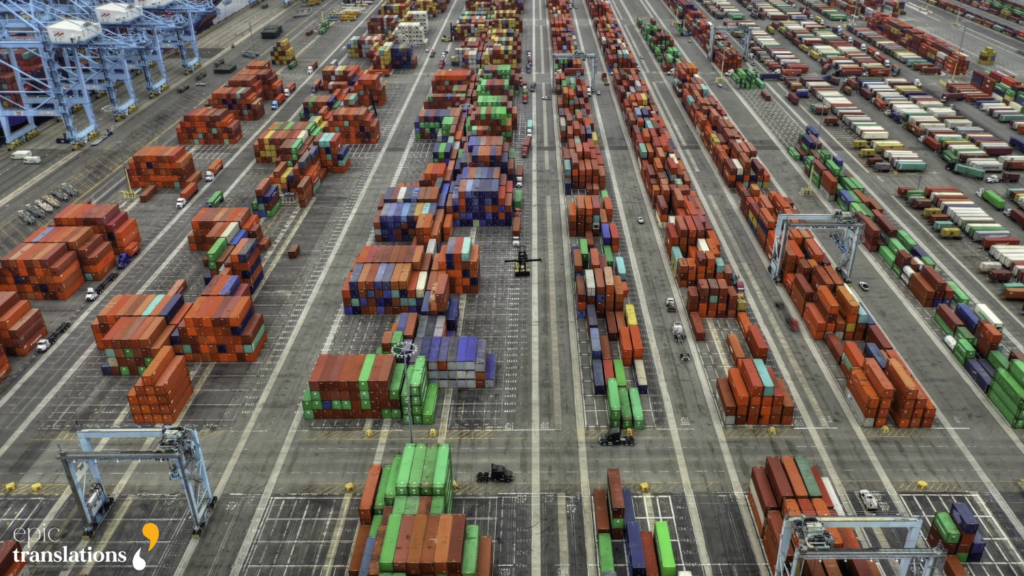
Translation errors do not only affect end users. They can also create major disruptions throughout global supply chains and international distribution networks.
Modern manufacturing environments depend heavily on coordinated communication between:
- suppliers,
- manufacturers,
- distributors,
- logistics providers,
- regulatory agencies,
- and end customers operating across multiple countries and languages.
When multilingual documentation contains errors or inconsistencies, operational delays can quickly spread across different stages of the supply chain.
For example, inaccurate multilingual labeling or incomplete compliance documentation may contribute to:
- customs clearance delays,
- rejected imports,
- shipment holds,
- relabeling requirements,
- or delayed market entry approvals.
These disruptions may create substantial financial consequences for organizations operating on strict production and distribution timelines.
Translation inconsistencies may also affect coordination between international suppliers and manufacturing partners. Incorrect terminology within technical specifications, engineering documentation, or assembly instructions can create confusion involving:
- component requirements,
- manufacturing tolerances,
- packaging standards,
- or operational procedures.
This becomes particularly challenging when organizations manage:
- multilingual vendors,
- global production facilities,
- regional distributors,
- and international regulatory requirements simultaneously.
In fast-moving industries, even short delays involving multilingual documentation may affect:
- product launch schedules,
- customer deliveries,
- inventory management,
- and contractual obligations.
Translation quality also affects communication throughout post-sale operations, including:
- technical support,
- maintenance services,
- product updates,
- and warranty administration.
As supply chains become increasingly globalized, multilingual communication should be viewed as a core operational infrastructure component rather than a standalone administrative function.
Professional translation workflows help organizations support supply chain continuity through:
- terminology consistency,
- multilingual formatting review,
- structured QA processes,
- and centralized documentation management.
Real-World Business Consequences of Translation Failures
Translation errors may trigger consequences far beyond simple customer complaints.
Potential outcomes include:
Product Recalls
Incorrect multilingual warnings or instructions may force organizations to:
- relabel products,
- reprint packaging,
- or issue corrected documentation.
This can create major logistical and financial burdens.
Regulatory Investigations
Regulatory agencies may scrutinize whether multilingual documentation adequately communicated product risks.
Poor translations may contribute to:
- compliance audits,
- import restrictions,
- fines,
- or enforcement actions.
Distributor and Partner Disputes
International distributors often rely on manufacturers for compliant multilingual documentation.
Translation problems can damage:
- channel relationships,
- market credibility,
- and operational trust.
Delayed Product Launches
Translation bottlenecks or multilingual QA failures may delay:
- international product rollouts,
- packaging approvals,
- compliance review,
- or market entry timelines.
For competitive industries, these delays may carry significant financial impact.
Reputational Damage
Customers and regulators increasingly expect global brands to communicate clearly across languages and regions.
Poor multilingual communication may damage:
- customer trust,
- public perception,
- investor confidence,
- and long-term brand reputation.
Why AI Translation Alone Can Be Dangerous for Technical Content
AI translation technology continues to improve rapidly and can provide meaningful efficiency benefits in certain workflows.
However, organizations should carefully evaluate where automation is appropriate and where human expertise remains essential.
Technical translation differs significantly from general conversational language.
High-risk technical documentation often requires:
- engineering interpretation,
- regulatory understanding,
- controlled terminology usage,
- multilingual formatting review,
- and contextual decision-making.
AI systems may produce translations that appear fluent while still containing:
- incorrect terminology,
- omitted meaning,
- inconsistent phrasing,
- or unsafe technical interpretations.
For example:
- a machine-generated translation may incorrectly interpret electrical terminology,
- mistranslate safety classifications,
- or create ambiguity in procedural instructions.
These risks increase substantially in regulated industries.
Many organizations now adopt hybrid translation workflows that combine:
- AI-assisted productivity tools,
- terminology management systems,
- professional technical linguists,
- editor review,
- and multilingual QA procedures.
Organizations expanding internationally also increasingly rely on structured AI-powered website localization workflows to support multilingual digital experiences while maintaining consistency, usability, and brand alignment across global markets.
This allows organizations to balance:
- scalability,
- turnaround speed,
- cost efficiency,
- and risk management.
The key issue is not whether AI should be used at all.
For many organizations, the most effective approach involves combining translation technology with qualified human oversight and structured quality assurance workflows. Hybrid translation models may help improve scalability and turnaround efficiency while still maintaining the technical review processes necessary for regulated and safety-sensitive content.
As AI translation adoption continues growing across enterprise environments, organizations should carefully evaluate which types of documentation can reasonably support automation and which materials require deeper linguistic, technical, and compliance review.
The key issue is whether appropriate human oversight and quality assurance controls are built into the workflow for technical and safety-critical content.

What Global Companies Should Look for in a Translation Provider
Selecting a translation provider for technical or regulated content should involve more than comparing pricing alone. Technical translation services for manufacturers require structured quality controls, subject matter expertise, terminology management, and formatting review.
Organizations should evaluate whether the provider maintains structured quality and operational controls designed for multilingual compliance environments.
Key areas to evaluate include:
Technical Subject Matter Expertise
Technical content should be assigned to linguists familiar with:
- manufacturing,
- engineering,
- healthcare,
- pharmaceuticals,
- automotive systems,
- or other relevant industries.
Industry familiarity improves terminology accuracy and contextual understanding.
Structured Quality Assurance Processes
Professional workflows for technical and regulated content often involve multiple layers of quality assurance, including translation review, editing, proofreading, terminology validation, and formatting verification. Many organizations also rely on professionally managed certified document translation services when accuracy, compliance, and official documentation standards are especially important.
Multi-step QA procedures help reduce multilingual inconsistencies and technical errors.
Terminology Management
Consistent terminology is critical for:
- safety communication,
- product documentation,
- compliance reporting,
- and operational clarity.
Translation providers should maintain:
- approved glossaries,
- terminology databases,
- and translation memory systems.
Multilingual Desktop Publishing Capabilities
Technical translation projects often require formatting preservation across:
- diagrams,
- manuals,
- packaging,
- labels,
- charts,
- and engineering layouts.
Desktop publishing support helps maintain visual clarity and document usability.
Confidentiality and Security Controls
Technical documentation frequently contains:
- proprietary product information,
- engineering specifications,
- compliance documentation,
- and confidential operational data.
Organizations should evaluate:
- secure file handling procedures,
- access controls,
- confidentiality protections,
- and controlled workflows.
Scalability and Global Coordination
Multinational organizations may require:
- high-volume multilingual support,
- accelerated turnaround times,
- and coordinated terminology management across multiple languages simultaneously.
Operational scalability becomes increasingly important for global product launches and enterprise-level documentation requirements.
Frequently Asked Questions
What industries face the highest risk from translation errors?
Industries involving technical, medical, industrial, or safety-related documentation generally face the highest risk. This includes manufacturing, medical devices, pharmaceuticals, automotive, industrial equipment, electronics, and chemical products.
Can translation errors lead to product liability lawsuits?
Yes. Inaccurate multilingual warnings, instructions, or safety documentation may contribute to legal claims involving failure to warn, negligence, inadequate labeling, or regulatory noncompliance.
Why are technical translations different from standard translations?
Technical translations involve specialized terminology, regulatory requirements, operational procedures, and safety-critical information that require subject matter expertise and structured quality assurance.
Is AI translation safe for technical documentation?
AI translation may support efficiency in certain workflows, but technical and regulated content generally requires qualified human review to ensure accuracy, consistency, and contextual correctness.
What is ISO 17100?
ISO 17100 is an international quality standard for translation services that establishes requirements for translation workflows, linguist qualifications, review procedures, and quality management processes.
Why is terminology consistency important in multilingual documentation?
Inconsistent terminology may confuse users, create operational misunderstandings, and increase safety or compliance risks across multilingual product documentation.
What types of documents should be professionally translated?
Examples include:
- product manuals,
- safety warnings,
- SDS documentation,
- packaging,
- compliance documentation,
- installation guides,
- training materials,
- and multilingual customer communication.
Conclusion
As global organizations continue expanding into international markets, multilingual communication increasingly affects:
- product safety,
- regulatory compliance,
- operational continuity,
- and legal exposure.
Translation errors involving technical documentation, warning labels, installation guides, or safety communication can create consequences far beyond simple linguistic inaccuracies. In regulated and safety-sensitive industries, multilingual documentation directly influences how products are understood, operated, and used across global markets.
Manufacturers, exporters, healthcare companies, industrial organizations, and multinational brands should approach multilingual documentation as a critical component of enterprise risk management.
Professional technical translation workflows help organizations:
- reduce multilingual compliance risks,
- improve operational consistency,
- support international market expansion,
- and strengthen global communication quality.
For global manufacturers, technical translation services for manufacturers should be treated as part of product safety, compliance, and international market readiness. EPIC Translations supports multinational corporations and global organizations with professional technical translation, multilingual desktop publishing, and structured quality assurance workflows designed for complex multilingual environments. If your organization is preparing multilingual product documentation, safety materials, technical manuals, or global compliance content, request a translation quote to discuss your multilingual communication and compliance requirements.