Top 2026 Translation & Interpretation Trends for Government Agencies | Government Translation Services Guide

Government agencies in 2026 are facing a convergence of pressures that make language access no longer a support function—but a core operational and compliance priority. Across federal, state, and local levels, agencies are serving increasingly diverse communities with growing Limited English Proficient (LEP) populations, while expectations around accessibility, equity, and responsiveness continue to rise. At the same time, enforcement of mandates such as Title VI, ADA, and Section 504 is becoming more visible and more rigorous—placing language access programs under greater scrutiny than ever before.
In this environment, government translation services are no longer simply about converting text from one language to another. They are about ensuring accurate, timely, and compliant communication across critical touchpoints—whether that’s a public health announcement, a court document, an emergency alert, or a school district notice. The cost of getting it wrong is no longer just reputational—it can mean regulatory risk, delayed services, or barriers to essential public programs.
At the same time, the way these services are delivered is rapidly evolving. Agencies are navigating a shift toward on-demand interpreting models, increased reliance on Video Remote Interpreting (VRI) and Over-the-Phone Interpreting (OPI), and the growing influence of AI-powered translation tools—all while maintaining strict requirements for human accuracy, confidentiality, and certification. The challenge is no longer just access—it’s how to scale language services efficiently without compromising quality or compliance.
This guide explores the top translation and interpretation trends shaping government agencies in 2026, and what they mean for procurement leaders, program managers, and compliance officers responsible for language access. Whether you are reevaluating your current vendor, expanding services to meet new demand, or preparing for future audits, understanding these trends is critical to building a resilient, compliant, and future-ready language access strategy.
Let’s take a closer look at where government translation services are heading—and how your agency can stay ahead.

Top 5 Translation & Interpretation Trends Shaping Government Agencies in 2026
Government agencies are no longer evaluating language services based on cost alone. In 2026, procurement decisions are being driven by compliance risk, response time, scalability, and accountability. The following trends are defining what “best-in-class” government translation services look like—and what agencies should expect from their language partners.
1. AI + Human Hybrid Translation Is Becoming the Standard
Artificial intelligence has entered the language services space in a meaningful way—but for government applications, AI alone is not sufficient.
Agencies are increasingly exploring AI-assisted workflows to:
- Accelerate turnaround times
- Reduce costs on high-volume content
- Support internal drafting and preliminary translations
However, for official communications—especially those involving legal, medical, educational, or public safety content—human oversight remains mandatory.
What’s emerging is a hybrid model, where:
- AI is used for speed and efficiency
- Professional linguists provide editing, validation, and certification
This model ensures:
- Accuracy in complex terminology
- Cultural appropriateness
- Compliance with federal and state requirements
What this means for agencies:
Vendors must demonstrate not just access to AI tools, but a structured workflow that integrates technology without compromising quality or compliance. The expectation is no longer “fast or accurate”—it’s both.
2. Title VI and Language Access Compliance Are Under Increased Scrutiny
Compliance is no longer a checkbox—it is a continuous, auditable requirement.
Government agencies are seeing increased attention around:
- Title VI of the Civil Rights Act
- ADA and Section 504 accessibility requirements
- Language access plans and documentation
Audits and public accountability are driving agencies to:
- Track language service usage more closely
- Ensure consistency in translated materials
- Provide timely access to interpreting services
This is especially critical in:
- Healthcare and public health agencies
- Courts and legal systems
- School districts and educational institutions
- Social services and workforce development programs
What this means for agencies:
Language service providers must offer:
- Documented quality assurance processes
- Certified translations where required
- Clear reporting and audit trails
The ability to demonstrate compliance is becoming just as important as delivering the service itself.
3. On-Demand Interpreting Is Replacing Traditional Scheduling Models
The expectation for speed has fundamentally changed.
Where agencies once scheduled interpreters days or weeks in advance, they now require:
- Immediate or same-day access
- Flexible support across multiple locations
- Coverage for both common and low-incidence languages
This shift is being driven by:
- Increased demand for real-time communication
- Unpredictable service needs (e.g., emergency response, walk-in services)
- Operational efficiency requirements
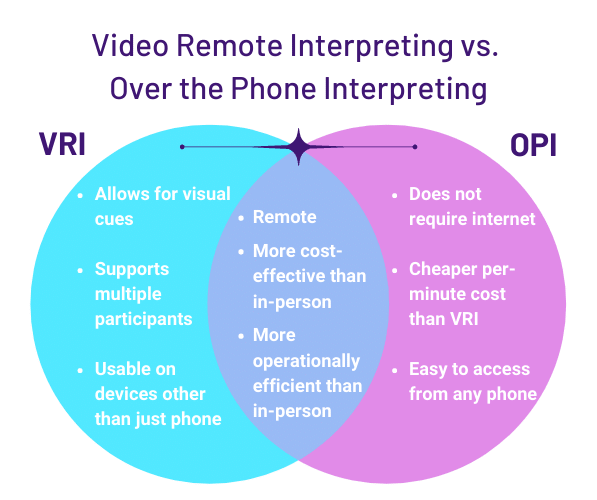
As a result, Over-the-Phone Interpreting (OPI) and Video Remote Interpreting (VRI), and American Sign Language (ASL) interpreting services are rapidly becoming core service delivery models.
What this means for agencies:
Your language partner must be able to provide:
- Rapid interpreter dispatch
- High fill rates across all languages
- Seamless integration into your existing workflows
Reliability and responsiveness are now critical evaluation criteria in RFPs.
4. Data Security and Confidentiality Requirements Are Increasing
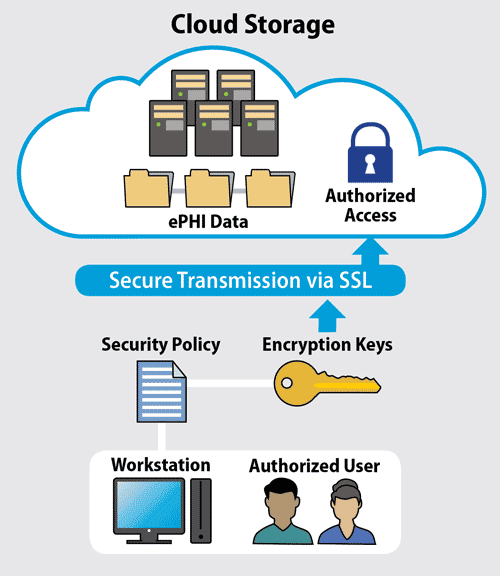
Government communications often involve sensitive and protected information, including:
- Personally identifiable information (PII)
- Medical records (HIPAA-regulated data)
- Legal and court documents
- Internal agency communications
As digital workflows expand, so do concerns around:
- Data transmission security
- Storage and retention policies
- Access control and user permissions
Agencies are now prioritizing vendors that can demonstrate:
- Secure file transfer protocols
- Encrypted communication channels
- Strict confidentiality agreements
- Controlled access to linguists and systems
What this means for agencies:
Language service providers must operate with enterprise-grade security practices, ensuring that all translations and interpreting interactions meet the highest standards of confidentiality and compliance.
5. Multilingual Digital Accessibility Is Expanding Rapidly
Language access is no longer limited to documents and in-person interactions. In 2026, agencies are expected to provide fully multilingual digital experiences.
This includes:
- Websites and online portals
- Mobile applications
- Digital forms and applications
- Video content with subtitles and voiceovers
As more services move online, agencies must ensure that:
- LEP individuals can access information independently
- Digital platforms meet accessibility standards
- Content is consistently translated and updated
This trend is particularly important for:
- Public-facing government websites
- Benefits and enrollment systems
- Emergency communication platforms
What this means for agencies:
Language service providers must go beyond translation to support:
- Multilingual desktop publishing (DTP)
- Website localization
- Multimedia translation and captioning
The ability to deliver a complete multilingual communication strategy is becoming a key differentiator.
The Bottom Line
These trends are reshaping how government agencies evaluate and procure language services. The expectations are clear:
- Speed without sacrificing accuracy
- Compliance backed by documentation
- Scalability across languages and service types
- Security and confidentiality at every level
Agencies that align with these trends will be better positioned to deliver equitable, compliant, and effective communication—while those that don’t risk falling behind both operationally and regulatorily.
In the next section, we’ll break down exactly what these trends mean for your agency’s procurement strategy—and how to select a language partner that is built for the demands of 2026 and beyond.
What This Means for Your Agency
Understanding these trends is only valuable if it translates into better decision-making, stronger vendor selection, and reduced operational risk. In 2026, government agencies are being evaluated not just on whether they provide language access—but how effectively, consistently, and compliantly they deliver it.
The reality is this: many agencies already have language service providers in place—but those providers were selected under outdated expectations. The trends outlined above are redefining what “qualified” actually means.

1. Procurement Must Shift from Cost-Based to Risk-Based Evaluation
Historically, language services were often awarded based on:
- Lowest cost per word
- Lowest hourly interpreting rate
That model is no longer sufficient.
In today’s environment, the real risks include:
- Non-compliance with Title VI or ADA requirements
- Inaccurate translations leading to miscommunication
- Delays in interpreter availability
- Lack of documentation during audits
What this means for your agency:
Procurement criteria should now prioritize:
- Proven compliance frameworks
- Quality assurance processes
- Response time guarantees
- Scalability across languages and service types
Cost still matters—but risk mitigation now carries greater weight in long-term value.
2. Vendor Accountability and Performance Tracking Are Essential
Agencies can no longer operate with limited visibility into language service delivery.
There is a growing expectation for:
- Measurable performance metrics
- Transparent reporting
- Clear communication between agency and vendor
This includes tracking:
- Interpreter fill rates
- Turnaround times for translations
- On-time delivery performance
- Service usage by department or language
What this means for your agency:
You should expect your language partner to provide:
- Regular reporting dashboards or summaries
- Defined service level expectations (SLAs)
- A centralized point of contact for coordination
Without this level of accountability, it becomes difficult to:
- Defend procurement decisions
- Demonstrate compliance
- Optimize service delivery over time
3. Centralized Language Access Strategy Is Becoming Critical
Many agencies still operate with decentralized language service usage, where individual departments:
- Source their own interpreters
- Use different vendors
- Follow inconsistent processes
This leads to:
- Inconsistent quality
- Higher costs
- Increased compliance risk
In contrast, leading agencies are moving toward centralized coordination models.
What this means for your agency:
A centralized approach allows you to:
- Standardize quality and processes
- Improve cost control through volume
- Ensure consistent compliance across departments
- Simplify reporting and oversight
This typically involves working with a single, scalable language services provider capable of supporting all departments and service types.
4. Speed and Coverage Are Now Core Requirements—Not Differentiators
In the past, fast turnaround or broad language coverage may have been seen as a bonus.
In 2026, they are baseline expectations.
Agencies now require:
- Same-day or immediate interpreter availability
- Coverage across 150+ languages, including low-incidence languages
- The ability to handle both scheduled and on-demand requests
What this means for your agency:
When evaluating vendors, you should assess:
- Depth of linguist network
- Ability to fulfill urgent requests
- Historical performance in meeting demand spikes
A provider that cannot reliably deliver when and where services are needed creates operational bottlenecks and service gaps.
5. Technology Integration Should Simplify—Not Complicate—Your Workflow
Technology is playing a larger role in language services, but not all solutions are created equal.
Agencies are encountering platforms that:
- Require complex onboarding
- Disrupt existing workflows
- Lack flexibility for real-world use cases
At the same time, well-designed systems can:
- Streamline request submission
- Improve communication
- Provide real-time visibility into service status
What this means for your agency:
Your language services provider should offer:
- Multiple request channels (portal, email, phone)
- Simple, intuitive workflows
- Integration with your existing systems where needed
Technology should act as an enabler of efficiency, not a barrier.
6. Your Language Partner Must Function as an Extension of Your Agency
Perhaps the most important shift is this:
Language service providers are no longer just vendors—they are operational partners.
Your provider should:
- Understand your agency’s mission and challenges
- Anticipate your needs
- Provide guidance on best practices
- Support you during audits, compliance reviews, and program expansion
What this means for your agency:
You should expect a partner who:
- Communicates proactively
- Takes ownership of service delivery
- Provides strategic insight—not just transactional support
This level of partnership is what separates average providers from those that truly support government success.
Bringing It All Together
The trends shaping 2026 are clear—and they are raising the bar for what government agencies should expect from their language services.
To remain compliant, efficient, and effective, your agency must:
- Move beyond cost-driven procurement
- Demand accountability and measurable performance
- Centralize and standardize language access
- Ensure rapid response and broad language coverage
- Leverage technology that enhances—not disrupts—operations
- Partner with a provider that operates at a strategic level
Agencies that take this approach will not only meet regulatory requirements—they will deliver more accessible, equitable, and effective services to the communities they serve.
In the final section, we’ll provide a deeper look at how your agency can take the next step—along with access to EPIC’s full 2026 Government Language Access Trends White Paper.
A Language Partner Built for the Demands of 2026
Leading government agencies are already adapting to these shifts—moving toward more centralized, responsive, and compliance-driven language access strategies. Successfully navigating this environment requires more than access to linguists; it requires a partner that understands the operational realities of public sector communication and can deliver consistently under pressure.
EPIC Translations supports federal, state, and local agencies across the country with scalable government translation services, on-demand interpreting solutions, and compliance-aligned workflows. From high-volume document translation and multilingual public communications to real-time interpreting for critical interactions, EPIC operates as an extension of the agencies it serves—delivering the speed, accuracy, and accountability required in today’s regulatory environment.
Access the Full 2026 Government Language Access Trends White Paper
While this guide highlights the key trends shaping government translation and interpretation services in 2026, many agencies are looking for deeper guidance on how to apply these insights in practice.
Don’t leave compliance to chance—get a customized quote at epictranslations.com/quote/ and build a scalable, audit-ready language access strategy.