Over-the-Phone Interpreting Services (OPI)

Real-Time Language Access by Phone—Supported by Centralized Interpreting Operations
EPIC provides professional over-the-phone interpreting services (OPI) for government agencies, healthcare organizations, schools, courts and other institutions requiring reliable real-time language access.
Qualified interpreters are supported by centralized interpreting operations through EPIC’s Staffing Resources Hub (SRH)—giving organizations a coordinated way to manage OPI access, departments, usage and service activity.
From individual calls to organization-wide language-access programs, EPIC helps institutions provide reliable telephone interpreting wherever conversations happen.
OPI for Organizations That Need Language Access Across Departments and Locations
EPIC supports telephone interpreting in institutional environments where language needs may arise across different departments, facilities, programs and communities.
Government & Public Services
Real-time telephone interpreting for agency offices, constituent services, public programs, administrative interactions and other public-facing communication.
Healthcare
Telephone interpreting for patient intake, scheduling, care coordination, consultations and other spoken interactions where audio-only access is appropriate.
Education
OPI support for schools, colleges and universities communicating with students, families, staff and community members across languages.
Legal & Administrative
Professional spoken-language interpreting for appropriate legal, administrative and institutional interactions conducted by telephone.
Language Access When the Conversation Can’t Wait
Over-the-Phone Interpreting gives organizations access to spoken-language interpreters without requiring participants to be in the same location or join a video session.
OPI is particularly useful when language needs arise unexpectedly, telephone access is the most practical option, or organizations need to support multiple departments and locations through a common interpreting program.
OPI is well suited for:
- Government offices and constituent services
- Healthcare intake and patient communication
- School and family communication
- Customer and community service interactions
- Administrative and eligibility interviews
- Scheduling and appointment coordination
- Remote offices and distributed service locations
- Short-duration or unscheduled conversations
- After-hours language needs
- Situations where on-site or video interpreting is unnecessary or impractical
EPIC coordinates qualified spoken-language interpreters for OPI interactions requiring clear, impartial and professional communication.
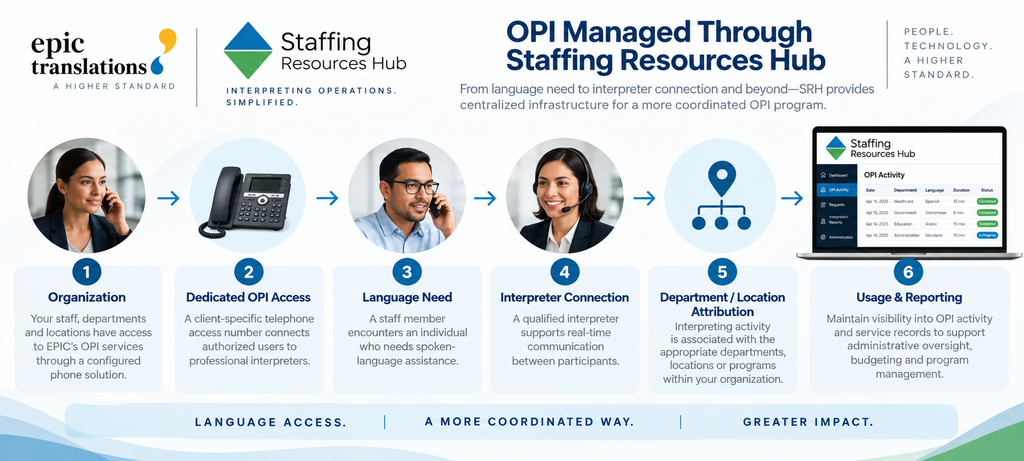
OPI Managed Through Staffing Resources Hub
Over-the-phone interpreting becomes more complex when access spans departments, locations, languages and users. EPIC’s Staffing Resources Hub (SRH) provides centralized infrastructure for operating OPI across your organization.
From client-specific OPI access and interpreter coordination to organizational visibility and service reporting, SRH helps turn individual interpreting calls into a manageable language-access program.
Centralized OPI Access
Establish an OPI service structure for authorized users, departments and locations rather than relying on disconnected interpreting arrangements.
Interpreter Coordination
EPIC coordinates qualified spoken-language interpreters according to language, availability, qualifications and service requirements.
Usage & Operational Visibility
Maintain visibility into OPI activity and service records across participating departments and locations.
See How OPI Is Managed Through SRH
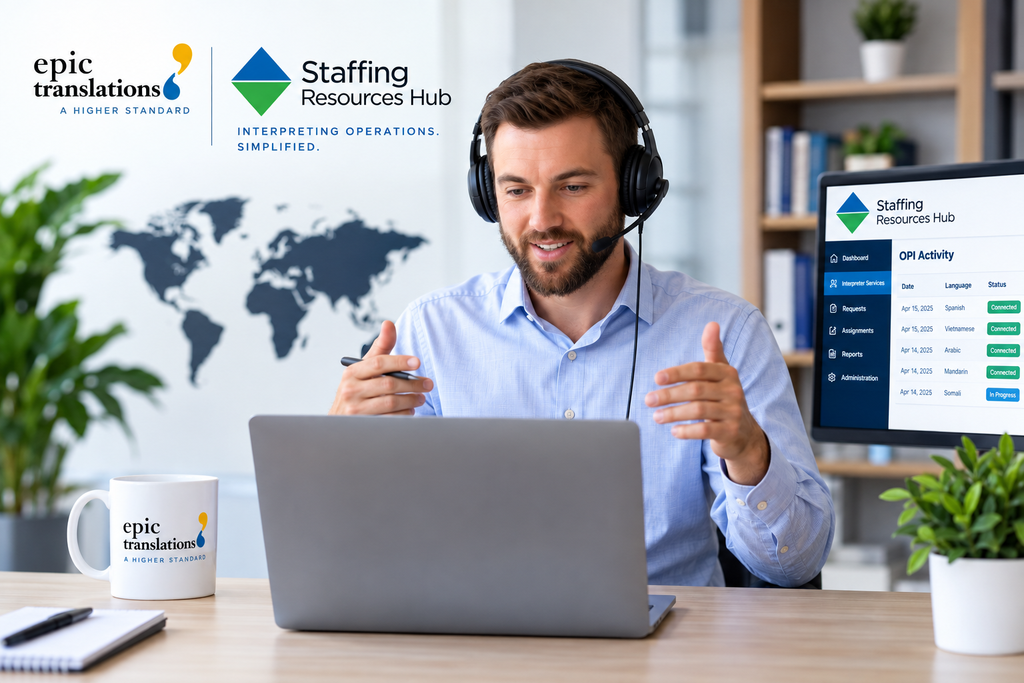
From Language Need to Interpreter Connection
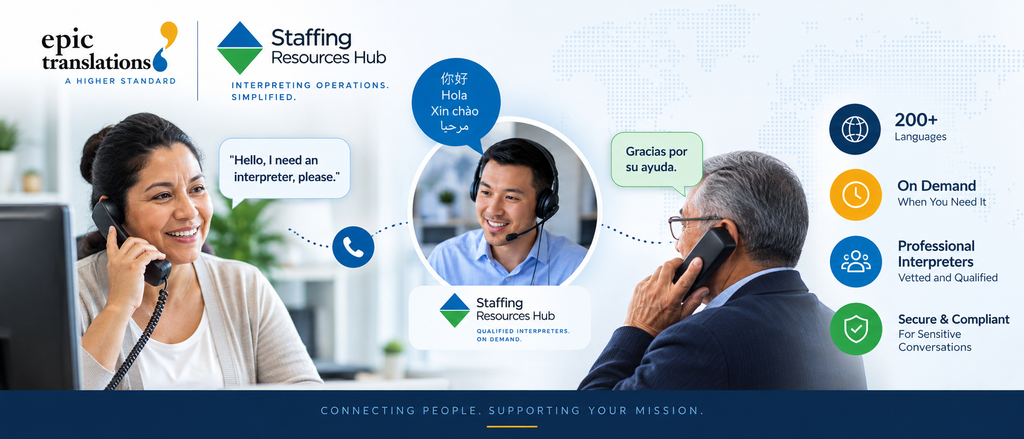
OPI Built Around Your Organization
EPIC can configure OPI around the way your organization operates—from occasional telephone interpreting for a single location to coordinated access across multiple departments, campuses or facilities.
Dedicated OPI Access
Client-specific telephone access can be established as part of your organization’s OPI implementation.
Department & Location Structure
Organize interpreting activity around participating departments, facilities or service locations.
Language Requirements
Configure service around the languages your organization encounters while maintaining access to broader language resources as needs change.
Administrative Oversight
Centralize operational visibility rather than requiring individual departments to manage interpreting independently.
Common Over-the-Phone Interpreting Scenarios
Organizations use OPI when immediate spoken-language access is needed and visual communication is not required.
- Government offices and constituent services
- Healthcare intake and patient communication
- School and family communication
- Customer and community service interactions
- Administrative and eligibility interviews
- Scheduling and appointment coordination
- Remote offices and distributed service locations
- Short-duration or unscheduled conversations
- After-hours language needs
- Situations where on-site or video interpreting is unnecessary or impractical
EPIC coordinates qualified spoken-language interpreters for OPI interactions requiring clear, impartial and professional communication.
Why Organizations Choose EPIC for OPI
Reliable OPI requires more than putting an interpreter on a telephone call. Organizations also need qualified resources, responsive coordination, continuity and visibility into how interpreting services are being used.
EPIC combines professional interpreters with centralized interpreting operations through Staffing Resources Hub.
Qualified Interpreters
Interpreter coordination considers language, qualifications, subject-matter requirements, availability and the needs of the interaction.
Centralized Operations
OPI can be administered as part of a coordinated interpreting program rather than managed independently by individual departments.
Organization-Wide Access
EPIC can support interpreting needs across participating departments, facilities and locations through a common service structure.
Operational Visibility
SRH supports administrative visibility into interpreting activity and service records across the organization.
Continuity of Service
EPIC can coordinate interpreting resources across languages and service modalities when organizational needs change.
When the Interaction Requires More Than Audio
OPI is appropriate when participants can communicate effectively by telephone. When visual communication is important or an interpreter needs to be physically present, EPIC also provides Video Remote Interpreting and on-site interpreting.
Organizations can use OPI, VRI and on-site interpreting according to the requirements of each interaction while maintaining coordinated interpreting services across departments and locations.
Video Remote Interpreting (VRI)
Live video and audio interpreting for interactions where visual communication, facial expressions or other visual context is important.
On-Site Interpreting
In-person professional interpreting for meetings, appointments, hearings and other situations where physical presence is appropriate.
Frequently Asked Questions About Over-the-Phone Interpreting
What Is Over-the-Phone Interpreting (OPI)?
Over-the-Phone Interpreting connects participants with a professional spoken-language interpreter by telephone in real time. It is particularly useful when immediate language access is needed and visual communication is unnecessary.
What Types of Organizations Use OPI?
OPI is used by government agencies, healthcare organizations, schools, universities, businesses and other organizations that need spoken-language assistance across departments, locations or public-facing services.
Can OPI Support Multiple Departments and Locations?
Yes. EPIC can structure OPI services across participating departments, facilities and locations, with centralized operational visibility through Staffing Resources Hub.
How Does EPIC Manage OPI Services?
EPIC’s interpreting operations are supported through Staffing Resources Hub (SRH), which provides centralized infrastructure for managing interpreting activity, organizational access and service records.
Can EPIC Provide a Dedicated OPI Number for Our Organization?
EPIC can establish dedicated telephone access as part of an organization’s OPI implementation when appropriate to the service configuration.
Can OPI Be Used for Occasional Language Needs?
Yes. OPI can support organizations with occasional interpreting requirements as well as institutions managing broader or recurring language-access needs.
What Is the Difference Between OPI and VRI?
OPI provides audio-only interpreting by telephone. VRI provides both video and audio and may be preferable when visual communication contributes to the interaction.
When Should We Use On-Site Interpreting Instead of OPI?
On-site interpreting may be more appropriate when physical presence, extended interaction, environmental context or the nature of the assignment makes in-person communication preferable.
How Do We Get Started With EPIC’s OPI Service?
EPIC will work with your organization to understand anticipated languages, users, departments, locations and usage requirements and establish the appropriate OPI service configuration.